Finds every device
triib discovers the ATDECC entities on the interface you pick, reads each entity model, its names, logos, streams, clocks and Milan support, and keeps it, so a device you have seen before shows in full at once. It keeps up with the changes other controllers make, even to entities that send no notifications.
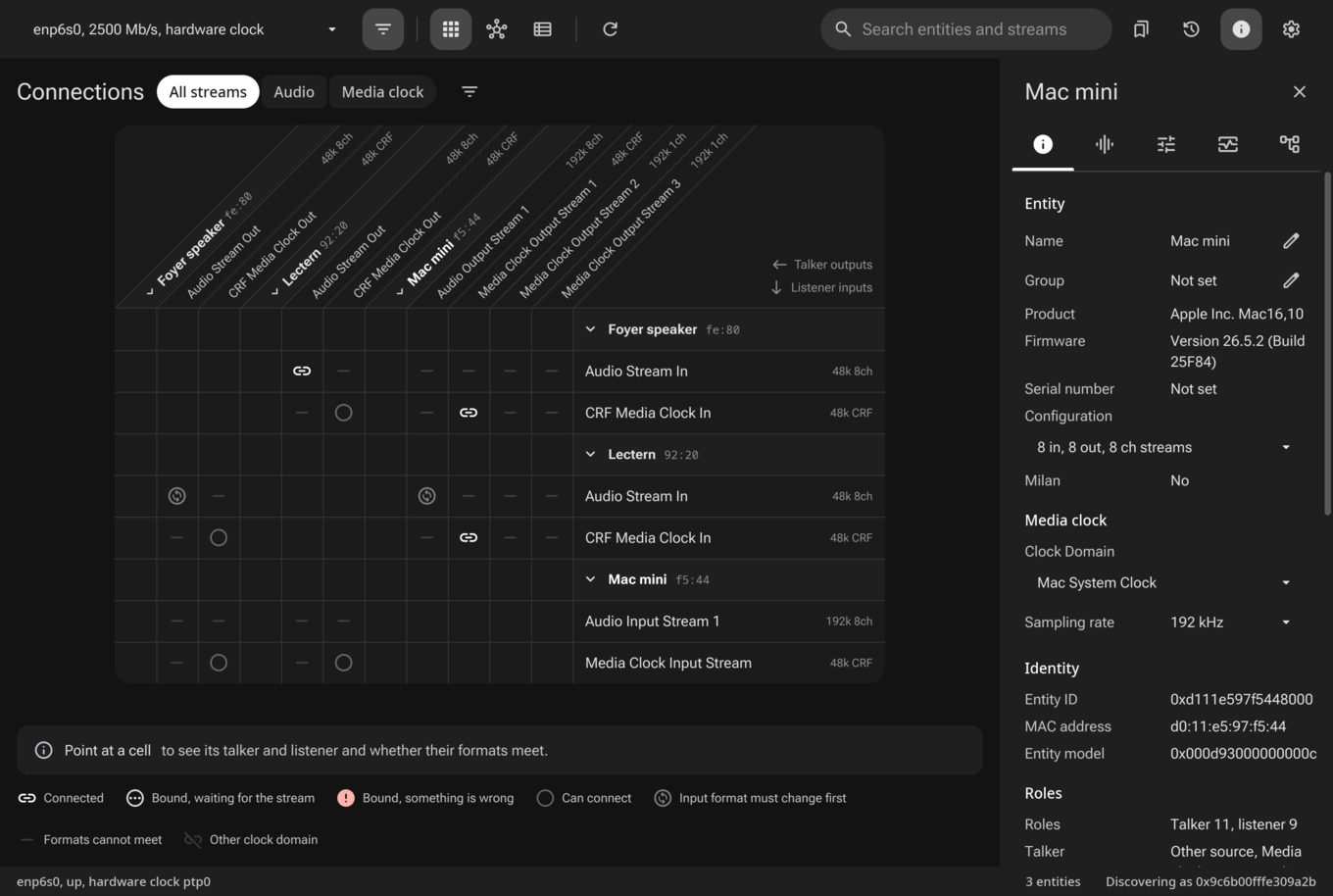
A connection matrix
Talker outputs across, listener inputs down: click a cell to connect or disconnect. Each cell shows whether the stream flows, waits or has failed, whether the two formats can meet, and whether the two ends share a clock domain.
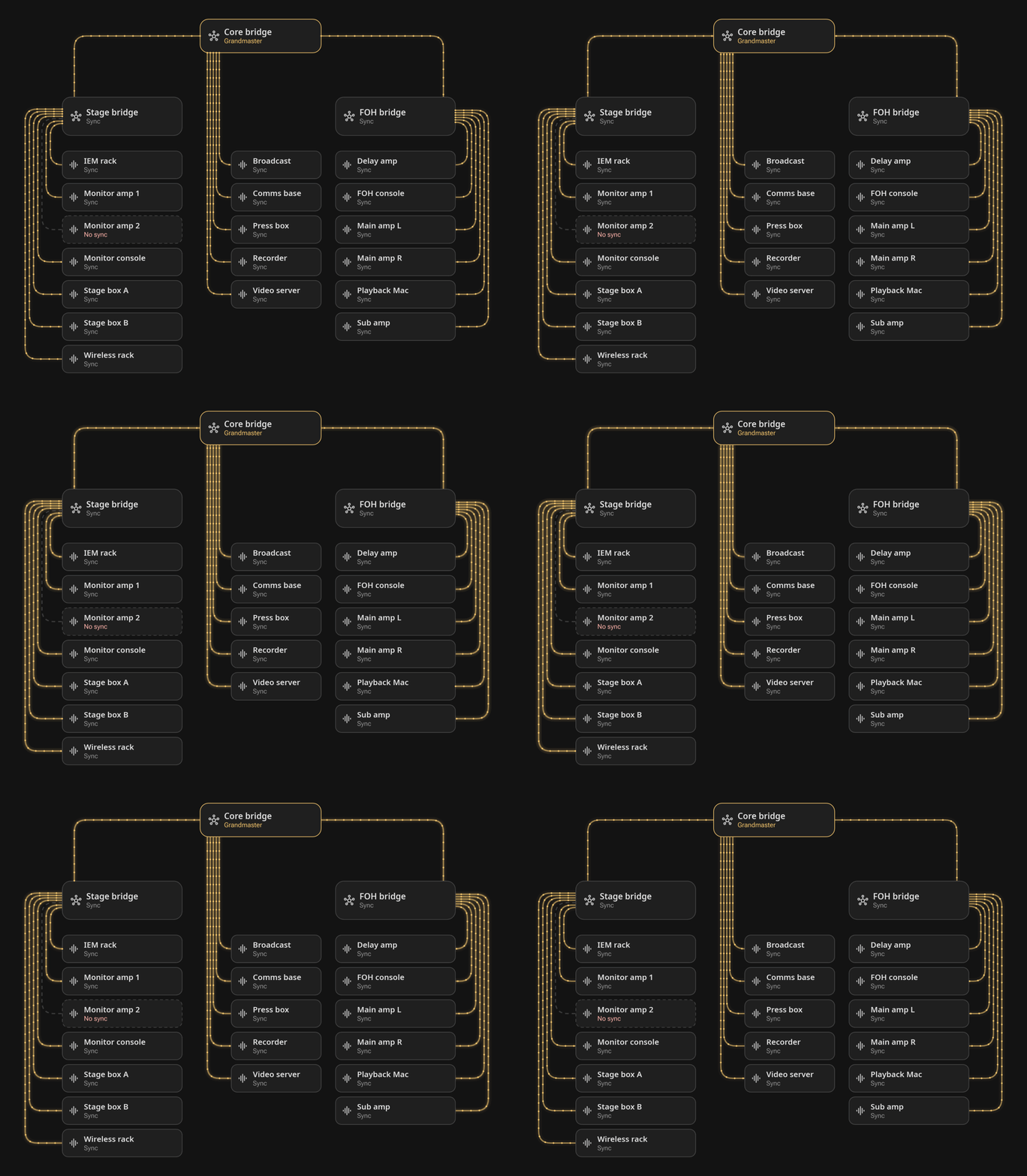
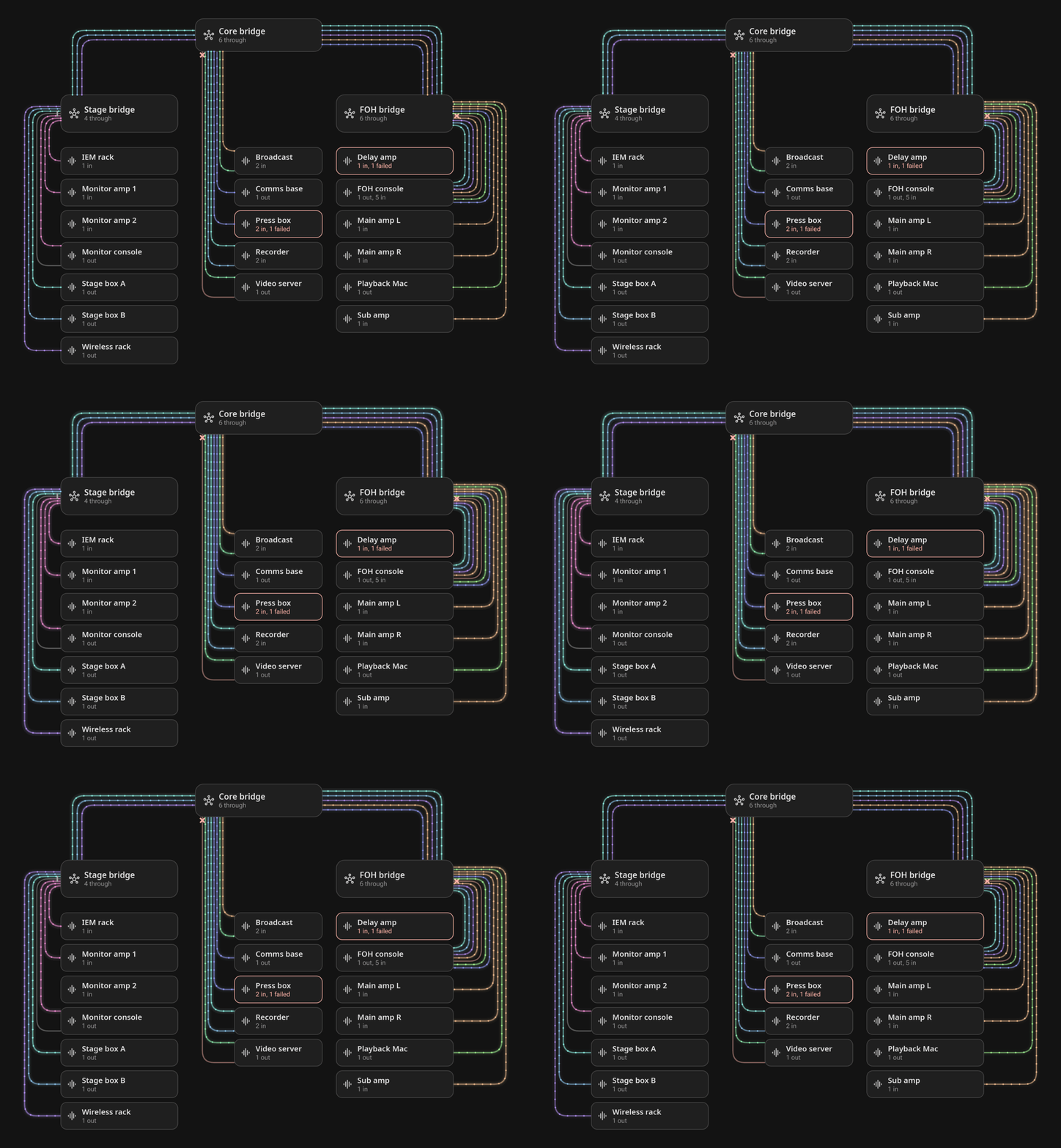
A map of the network
Bridges and devices in their clock domains, from each entity's gPTP path, every stream's traffic on each link as its own wire, and the clock tree from the grandmaster, with each device in sync or not. A failed reservation shows in red where it stops.
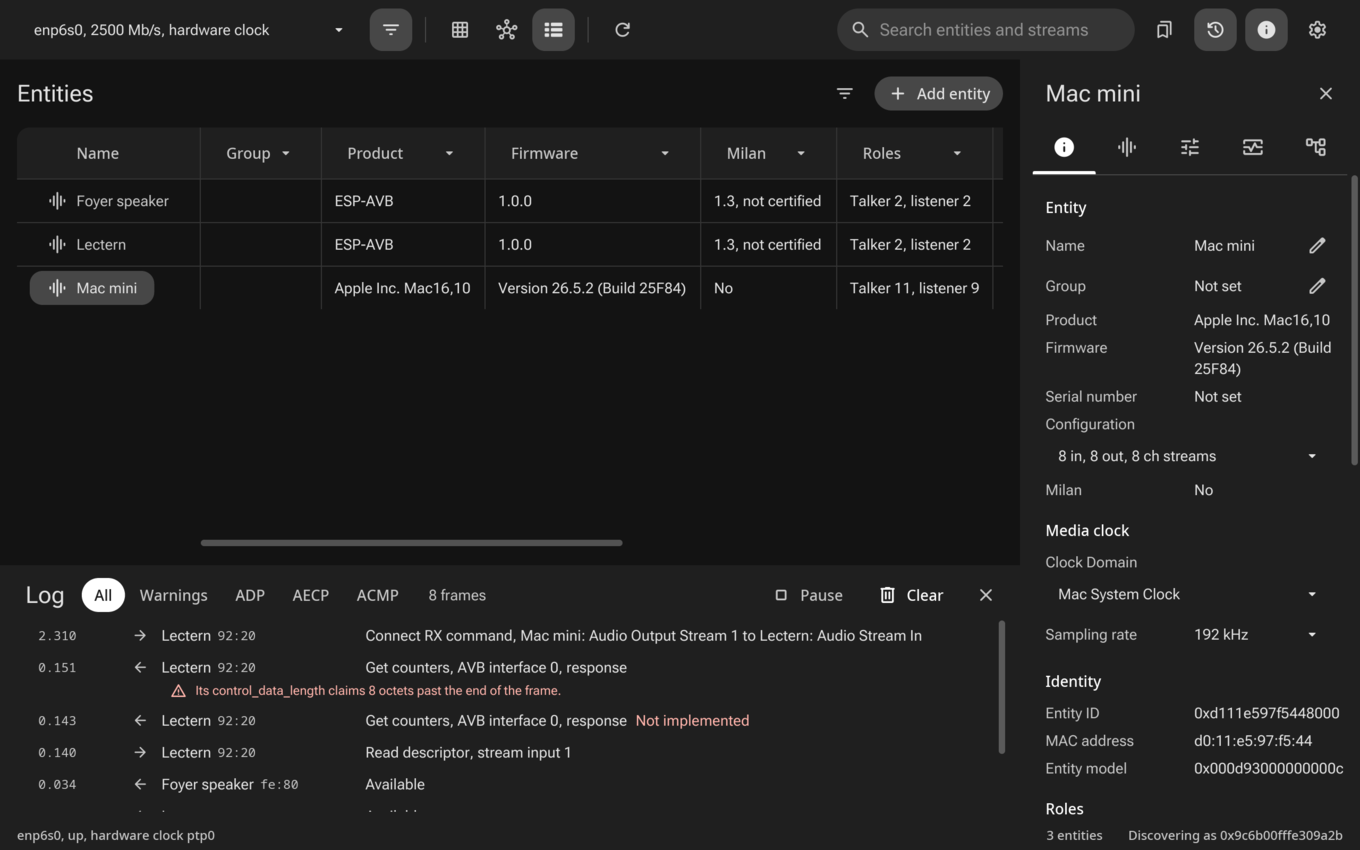
A list of every entity
A row for each entity, with the columns you pick, from product and firmware to media clock, grandmaster and logos. Change a clock source right in the list, and filter it to this computer's entities, without controllers, or to this computer's clock domain.
Changes that matter
Rename entities, pick their configurations, change stream formats, sampling rates, clock sources and max transit times, map channels to streams, set controls such as gain and mute, and make a device identify itself.
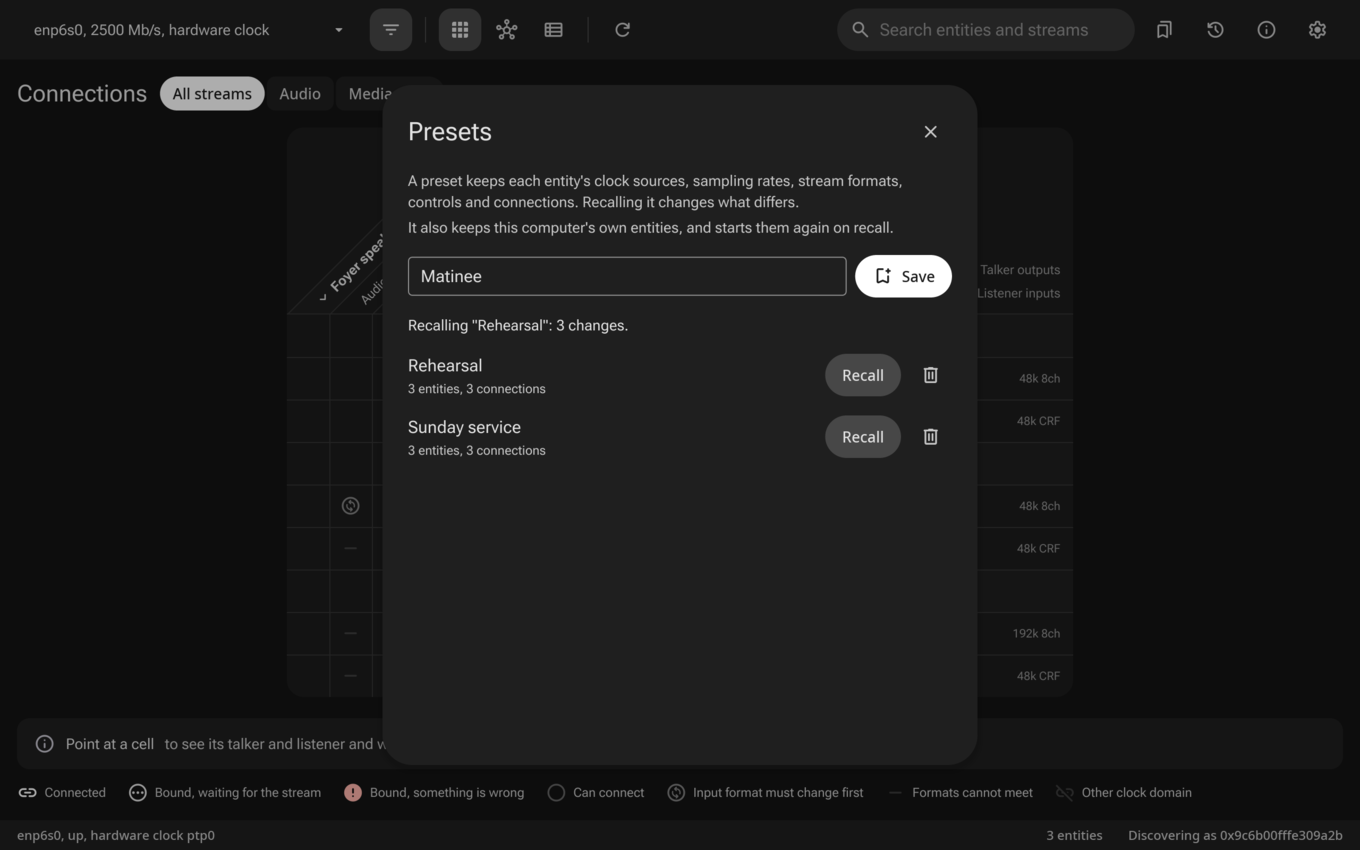
Presets
Save each entity's clock sources, sampling rates, stream formats, controls and connections, and recall them later: triib changes only what differs.
What went wrong
Each entity's counters since it started, its reservations, and what its streams take of each link, with what went wrong marked, and in the status bar the alarms triib finds across the network.
Every frame in the log
Every ATDECC frame sent and heard, decoded in plain words, with the ones that break the rules marked and the reason given.
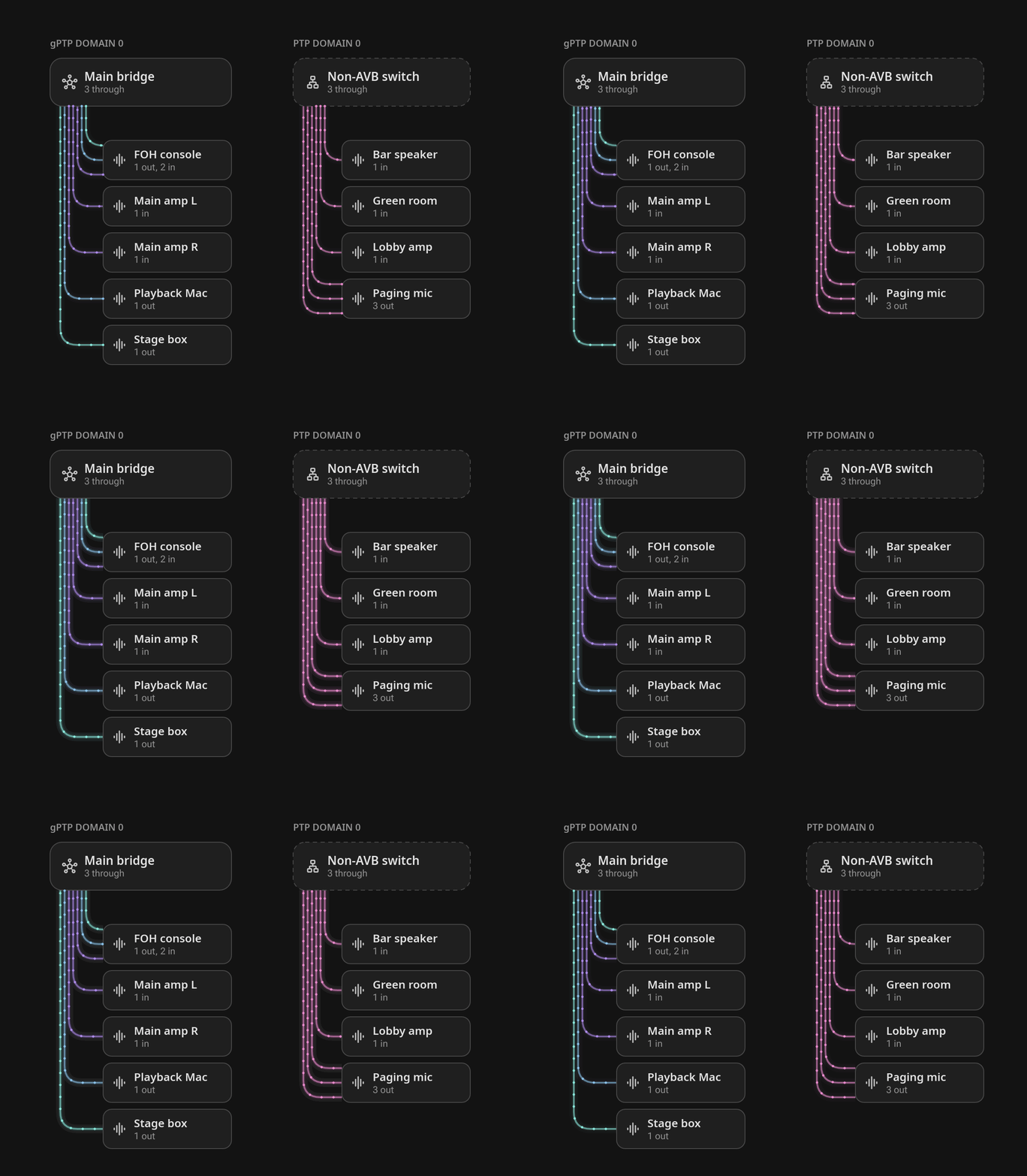
AVB Lite
See how devices run AVB Lite over switches that are not AVB bridges: their mode and why, their PTP offset, what their streams take of each link, and the alarms the profile calls for.
AVB Wireless
Wi-Fi stations and access points under the AVB Wireless profile: each station's link and time, the access point it follows, and whether an access point can carry Class A.
Host entities
On Linux, on an interface with a PTP hardware clock, with nothing to set up, triib runs Milan entities with any number of streams each way: AAF or AM824 audio at 48, 96 or 192 kHz, each stream with its own virtual audio device or one of the computer's and a peak meter in the inspector, and CRF media clock streams, any input the entity's clock source.
The Mac's own entity
On a Mac, the Mac's own AVB entity shows as a host entity, with its audio device, its configurations and its streams' peak meters, and Listen plays what it receives, or what apps send through it, on an output you pick.
Help from AI agents
Agents such as Claude Code can read the network, make changes through triib --mcp the same way a click does, and work out why a stream does not play, once you let each one in.
A command line and libraries
triib-cli does the same from scripts. The protocols are Rust crates of their own, atdecc, avb-mrp and avb-net, for other apps and for microcontrollers.
At home on your desktop
Light or dark, in the accent colour of your system or its Omarchy theme, or one you pick, and in 38 languages, right to left among them. On a Mac, the menu bar has triib's menus.
 triib